


Overdue follow-up usually does not break because a business does not care about getting paid.
It breaks because the work sits in an awkward space between bookkeeping, operations, habits, and tools.
The accounting system can show that an invoice is overdue. Someone on the team can see it. But the actual follow-up process often has no clear owner, no repeatable rhythm, and no clean record of what was already sent. That is when the work turns into manual chaos.
The ownership problem comes first
In many small businesses, overdue follow-up belongs to everyone and therefore to no one.
Bookkeeping may know the invoice is late. Operations may know the customer context. The owner may want to protect the relationship. Admin may be the person expected to send the reminder. Each person has part of the picture, but nobody fully owns the workflow.
That creates a familiar pattern:
- reminders wait because someone assumes another person will handle them
- wording changes from one send to the next
- the team hesitates because nobody wants to sound too aggressive
- the same account gets too many reminders or not enough
What looks like a collections problem is often an ownership problem first.
If nobody owns the queue, nobody owns the outcome.
Where reminders stall
Most reminder workflows do not fail at intent. They fail in the handoff moments.
Someone notices an overdue balance but does not know whether sales already spoke to the customer. Another person wants to send a reminder but is unsure whether there is an exception, dispute, or promised payment date. The result is delay, hesitation, and guesswork.
Even a polite process gets messy when the team has to answer the same questions every time:
- Is this invoice actually ready for follow-up?
- Has anything already been sent?
- Should this customer be excluded for now?
- Who is making the call?
If those answers are scattered across inboxes, memory, and accounting notes, follow-up becomes slower and more awkward than it should be.
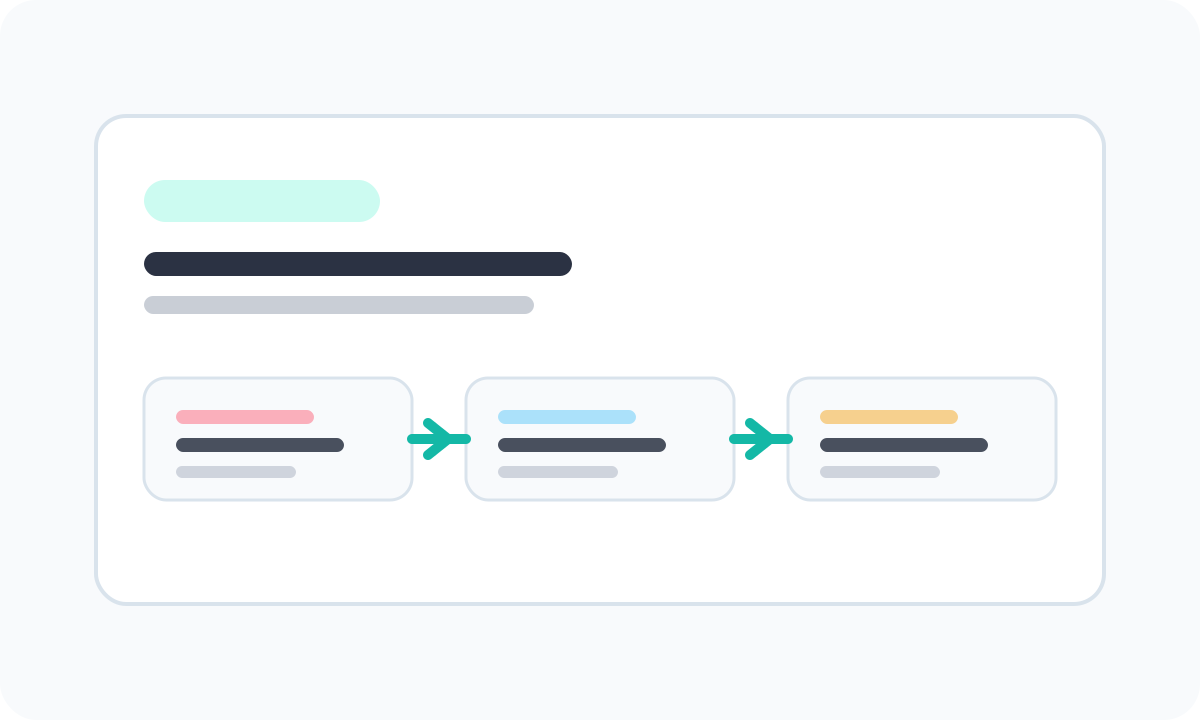
The hidden cost is admin drag
Delayed payment matters, but the hidden cost is the admin drag around it.
Teams lose time re-checking context, rewriting simple messages, and trying not to step on each other. The process feels heavier than it should, so it gets postponed. That makes the next follow-up harder, not easier.
This is why many businesses drift between two bad modes:
- too passive for too long
- suddenly too forceful once the balance has aged badly
Neither mode feels controlled, and neither creates a calm system.
The minimum viable workflow is simpler than it sounds
Most small businesses do not need a large collections department or an aggressive automation stack.
They need a narrow workflow with a few basics:
- a clear queue of overdue invoices that need attention
- a review step before reminders go out
- visible send history so nobody guesses what happened last
- a simple way to pause or exclude edge cases
That is enough to create consistency without removing judgment.
The goal is not to automate every decision. The goal is to stop rebuilding the process from scratch every time an invoice goes overdue.
Nudgora is built around that narrower problem. QuickBooks already handles the ledger. The gap is the overdue follow-up workflow that sits on top of that ledger: what needs attention, what should be reviewed, what was sent, and what should wait.
If that sounds familiar, the problem may not be tone first. It may be the lack of a consistent follow-up workflow.
Start a free trial and put a steadier follow-up workflow in place.
Use Nudgora to review overdue invoices, keep send history visible, and make reminder follow-up feel more controlled without adding a heavier receivables system.